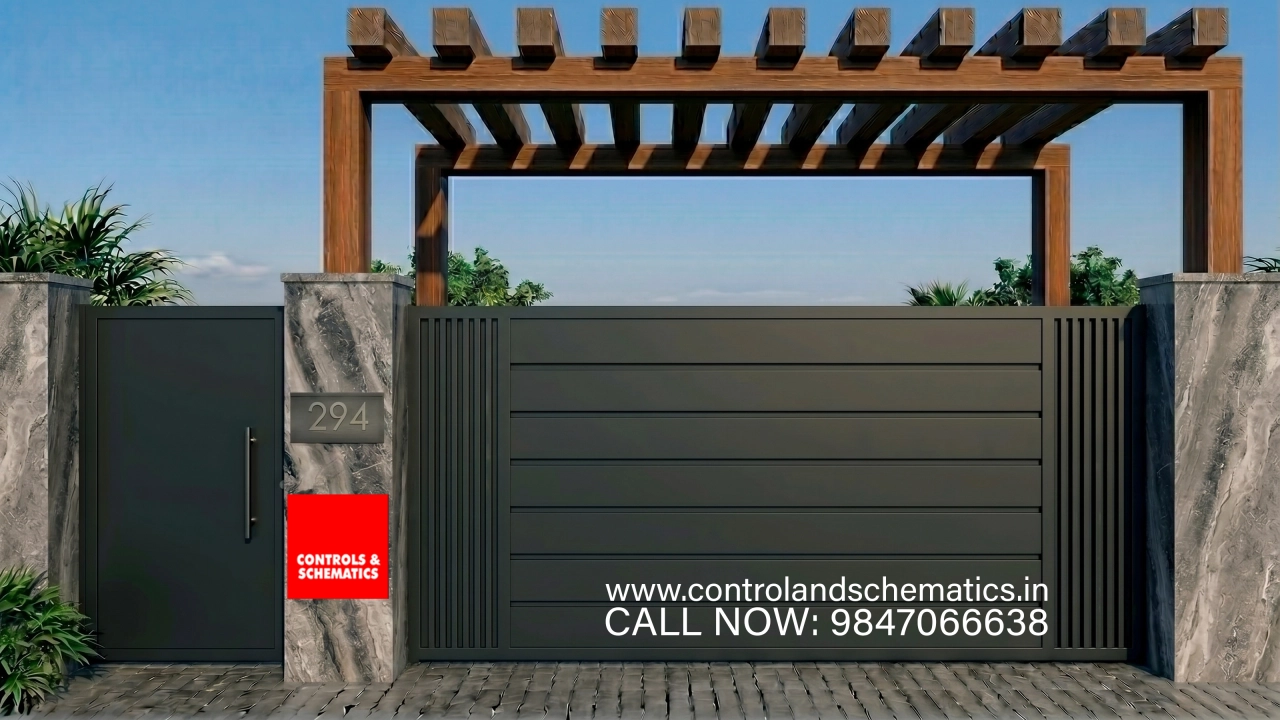
Planning a gate may appear simple until fabrication begins.
Many homeowners focus mainly on choosing a gate design from a catalogue or social media post. However, the design is only one part of the decision. A gate must also fit the entrance, support vehicle movement, provide privacy, match the house, withstand Kerala’s climate and remain easy to operate for many years.
Poor planning can result in a gate that looks attractive but creates daily inconvenience.
The gate may scrape the driveway, block parked vehicles, become difficult to open, fail to provide privacy or require frequent repairs. In some cases, homeowners complete the pillars and boundary wall before finalising the gate, only to discover that the opening is too narrow or the structure cannot support the selected design.
Understanding how to plan a gate for your home can help avoid these problems.
This guide explains the complete gate-planning process for Kerala homes, including site measurement, entrance width, driveway slope, gate material, opening mechanism, privacy, pillars, automation, drainage, safety and long-term maintenance.
Why Gate Planning Should Begin Early
The entrance gate should ideally be planned along with the boundary wall, driveway and front landscape.
Planning early helps coordinate:
- Gate width
- Gate height
- Pillar location
- Driveway level
- Vehicle turning space
- Pedestrian access
- Electrical wiring
- Drainage
- Automation
- Lighting
- Nameplate position
- Boundary wall design
When the gate is treated as the final item after construction, homeowners may have limited options.
For example, a sliding gate requires sufficient side clearance. If the boundary wall has already been built with a pedestrian gate, utility box or landscape feature in that area, the sliding gate may no longer be practical.
Similarly, a swing gate may not work if the driveway rises sharply from the road.
Early planning provides more flexibility and can reduce costly changes.
Start with the Property Layout
Before selecting a material or design, study the property entrance.
Important questions include:
- How wide is the road?
- How wide is the entrance?
- Where will vehicles turn?
- Is the driveway level or sloping?
- How close is the car porch?
- Is the house near the road?
- Is there enough space along the boundary wall?
- Is a pedestrian entrance required?
- Are there drainage channels near the gate?
- Will the gate be manual or automatic?
The answers will determine the most suitable gate configuration.
Measure the Entrance Correctly
Accurate measurement is the foundation of gate planning.
The entrance should be measured at multiple points because pillars and walls may not be perfectly parallel.
The fabricator should check:
- Clear width between pillars
- Pillar height
- Pillar depth
- Road level
- Driveway level
- Ground slope
- Side clearance
- Opening clearance
- Distance to the car porch
- Boundary wall length
Measurements should be taken after considering plastering, cladding, tiles and final finishes.
A gate fabricated according to unfinished structural dimensions may not fit properly after the pillars receive stone or tile cladding.
How Wide Should a Residential Gate Be?
The required gate width depends on vehicle size, road width and turning angle.
A wider entrance is generally easier for vehicles, but increasing width also increases:
- Gate weight
- Material usage
- Hardware requirements
- Structural load
- Automation cost
- Wind pressure
The gate should therefore be wide enough for comfortable entry without becoming unnecessarily large.
Factors affecting gate width include:
- Small car or SUV
- Number of vehicles
- Narrow or wide road
- Straight or angled entry
- Car porch position
- Boundary wall alignment
- Future vehicle requirements
A property on a narrow road may need a wider entrance to make turning easier.
A property with a wide road and straight driveway may function well with a more compact gate.
The dimensions should be finalised through an actual vehicle-movement assessment rather than a standard assumption.
How Tall Should the Gate Be?
Gate height affects privacy, security and appearance.
A taller gate can provide more privacy, but it may also:
- Make a small home feel enclosed
- Increase wind pressure
- Increase gate weight
- Require stronger pillars
- Reduce airflow
- Block the view of the house
A lower or more open gate can make the property feel spacious but may provide limited privacy.
The right height should consider:
- Boundary wall height
- House scale
- Road level
- Privacy requirements
- Gate design
- Pillar proportions
- Local surroundings
The gate should normally align visually with the boundary wall and entrance pillars.
A gate that is significantly taller or shorter than the surrounding structure may look unbalanced.
Check the Road Level and Driveway Slope
Road and driveway levels strongly influence gate operation.
Upward-Sloping Driveway
When the driveway rises from the road toward the house, an inward-opening swing gate may scrape the ground.
Possible solutions include:
- Sliding gate
- Outward-opening swing gate where appropriate
- Increased bottom clearance
- Rising hinges
- Driveway modification
A sliding gate is often the most practical choice for upward-sloping entrances.
Downward-Sloping Driveway
A downward slope may allow a swing gate to open inward, but water drainage and vehicle control should be considered.
Uneven Entrance
Uneven paving can affect:
- Sliding tracks
- Gate ground clearance
- Lock alignment
- Automation
- Wheel movement
The final paving level should ideally be completed or clearly marked before gate fabrication.
Choose Between Sliding and Swing Gates
The opening mechanism should be selected according to site conditions.
When to Choose a Sliding Gate
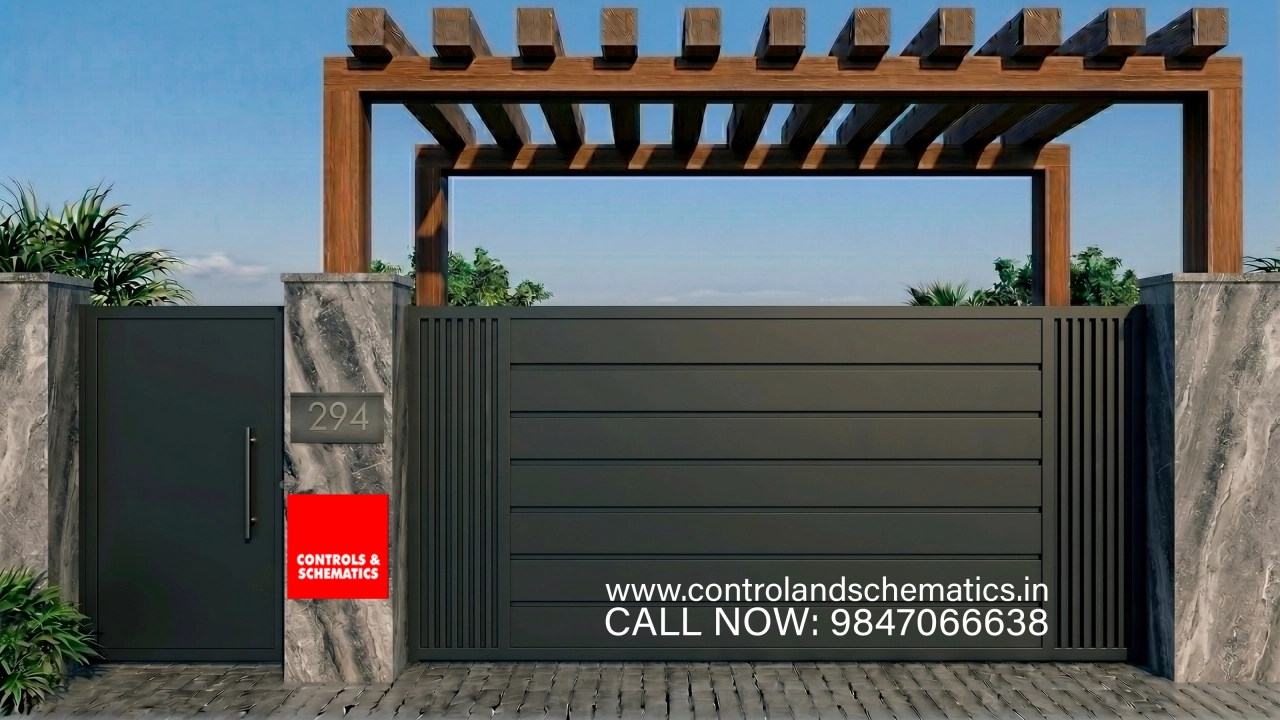
Sliding gate design
A sliding gate may be better when:
- The driveway is short
- Vehicles park close to the entrance
- The house is near the road
- The road is narrow
- The driveway slopes upward
- Inward opening space is unavailable
- Automation is planned
- The entrance is wide
A standard sliding gate requires sufficient side space along the boundary wall.
The clear sliding space is usually approximately equal to the gate opening width.
When to Choose a Swing Gate
A swing gate may be better when:
- The driveway has sufficient depth
- The entrance is level
- Side clearance is limited
- A traditional appearance is preferred
- Installation simplicity is important
- The budget is more restricted
- Strong gate pillars are available
Double-leaf swing gates are commonly used for residential entrances because they divide the weight between two leaves.
Do Not Select the Gate Type Only by Appearance
Both sliding and swing gates can be designed in traditional, modern or minimalist styles.
The opening mechanism should be selected based on functionality first. The visual design can then be adapted to the chosen system.
Plan Vehicle Movement
The gate should allow vehicles to enter without difficult manoeuvring.
Check:
- Road width
- Turning radius
- Vehicle length
- Vehicle width
- Gate opening width
- Pillar position
- Drainage channels
- Nearby walls
- Utility poles
- Parking position
A gate may appear wide when viewed from the property but still be difficult to enter from a narrow road.
The approach angle matters.
Where possible, test the entrance layout using the family’s largest vehicle before completing the pillars.
Consider Future Vehicle Needs
Homeowners should plan for possible future changes.
A family currently using a compact car may later purchase an SUV or larger vehicle.
The entrance should also allow:
- Ambulance access where possible
- Furniture delivery
- Construction vehicles
- Maintenance equipment
- Guest vehicles
This does not mean creating an excessively wide gate. It means avoiding a dimension that is only suitable for the present vehicle.
Decide the Privacy Level
Privacy requirements should be discussed before finalising the pattern.
Open Gate
An open gate uses wider spaces between bars or slats.
Advantages include:
- Better airflow
- Better visibility
- Lighter appearance
- Lower wind pressure
- Easier visual monitoring
It may suit:
- Quiet residential areas
- Landscaped front yards
- Larger compounds
- Homes set far from the road
Semi-Private Gate
A semi-private gate balances visibility and coverage.
It may use:
- Closely spaced slats
- Solid lower panels
- Perforated sheets
- Laser-cut panels
- Angled members
- Alternate open and closed sections
This is suitable for many Kerala homes because it provides privacy without making the entrance completely enclosed.
Fully Covered Gate
A fully covered gate provides maximum privacy.
It may suit:
- Homes near busy roads
- Closely built neighbourhoods
- Properties requiring visual screening
- Homes with open front living areas
Solid gates require stronger frames because they experience greater wind pressure.
Plan for Children and Pets
Homes with children or pets require additional safety planning.
Check:
- Bottom clearance
- Bar spacing
- Sharp edges
- Climbable horizontal members
- Lock position
- Automatic gate sensors
- Pinch points
- Pedestrian access
- Closing speed
A large gap below the gate may allow small pets to escape.
Wide spacing between bars may allow children to place their head or arms through the gate.
Decorative spikes should not be placed at an unsafe height.
Choose the Right Gate Material
The material affects strength, appearance, cost and maintenance.
Mild Steel
Mild steel is highly versatile and suitable for custom fabrication.
Advantages include:
- Strong structural performance
- High design flexibility
- Suitable for traditional and modern gates
- Multiple colour options
- Compatibility with sheets, slats and panels
- Easy repair and modification
Its main limitation is susceptibility to rust if the protective coating is damaged.
Mild steel should receive:
- Proper surface cleaning
- Rust treatment
- Suitable primer
- Exterior-grade coating
- Periodic inspection
Stainless Steel
Stainless steel offers:
- Good corrosion resistance
- Metallic appearance
- Lower painting requirements
- Easy routine cleaning
- Suitability for modern designs
The stainless steel grade should be selected according to the location, especially in coastal areas.
Brushed and satin finishes often suit modern villas better than highly reflective mirror finishes.
Aluminium
Aluminium provides:
- Low weight
- Natural resistance to rust
- Clean appearance
- Suitability for slatted designs
- Reduced stress on hinges and motors
It requires suitable internal reinforcement for large gates.
Natural Wood
Wood provides warmth and traditional character.
However, it requires protection from:
- Rain
- Humidity
- Termites
- Sunlight
- Fungal growth
Natural wood is often combined with a metal frame.
Wood-Finish Alternatives
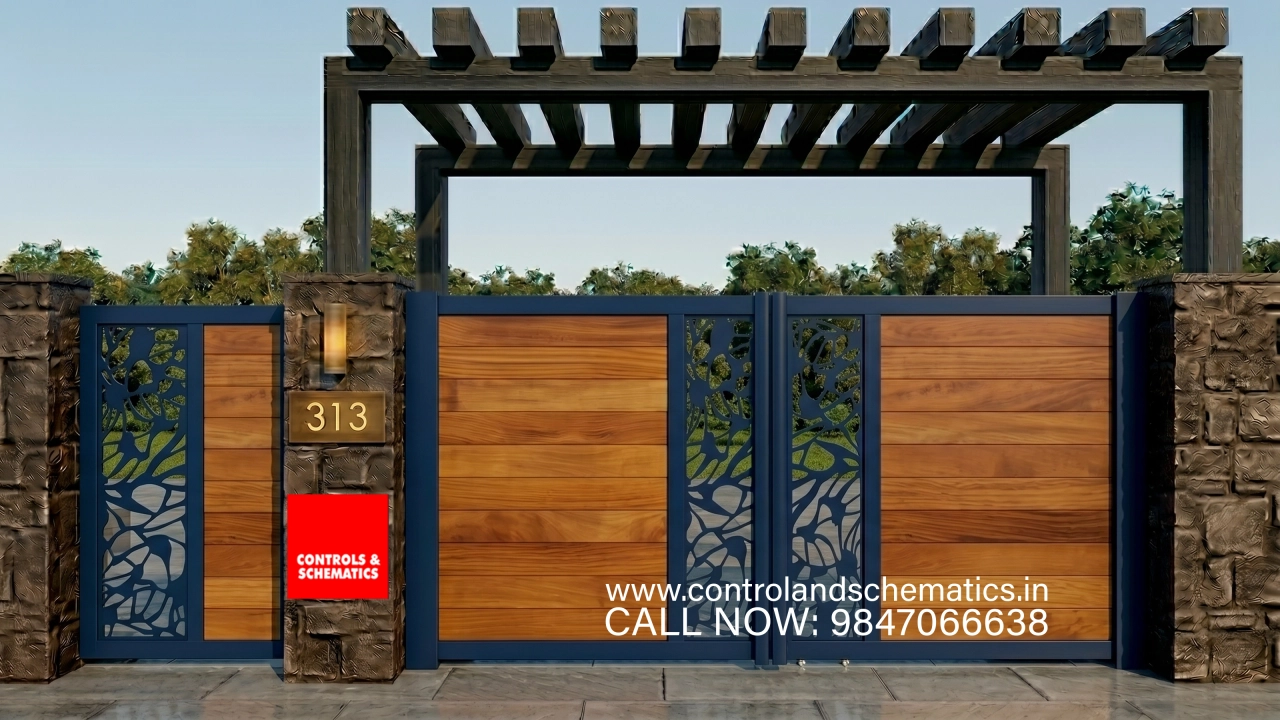
Wooden gate design
Options include:
- Aluminium wood-finish sections
- Wood-plastic composite
- Exterior-grade decorative panels
- Metal sheets with wood-effect coating
These may provide the appearance of timber with lower maintenance.
Mixed-Material Gates
Mixed-material gates may combine:
- Mild steel and wood
- Stainless steel and glass
- Aluminium and composite panels
- Mild steel and laser-cut sheets
- Matte metal and wood-finish slats
The combination should remain simple. Too many materials can create visual clutter and complicate maintenance.
Match the Gate with the House Architecture
The gate should look like part of the property.
Study the home’s:
- Roof style
- Exterior colours
- Window frames
- Main door
- Balcony railings
- Cladding
- Stonework
- Columns
- Landscape
- Lighting
The gate does not need to copy every detail.
It can repeat one or two elements, such as:
- The colour of the window frames
- The wood finish of the entrance door
- The horizontal lines of the balcony
- The stone used on the facade
- The curves of traditional windows
This creates visual continuity.
Gate Planning for Traditional Kerala Homes
Traditional Kerala homes often suit:
- Double-leaf swing gates
- Wood-finish panels
- Decorative mild steel patterns
- Curved frames
- Dark brown or black finishes
- Antique bronze details
- Tiled entrance roofs
- Stone-clad pillars
The gate should remain balanced and should not be overloaded with ornamentation.
Gate Planning for Modern Villas
Modern villas often suit:
- Horizontal slats
- Vertical fins
- Geometric panels
- Matte black finishes
- Charcoal grey
- Wood-and-black combinations
- Minimalist sliding gates
- Laser-cut sections
- Asymmetrical designs
Modern gate design depends heavily on alignment and fabrication quality.
Select the Colour Carefully
Gate colour should coordinate with the property.
Popular options include:
- Matte black
- Charcoal grey
- Dark brown
- Black and wood finish
- Grey and wood finish
- Antique bronze
- Dark green
- White and grey
- Black with limited gold accents
Dark colours may create a strong appearance but can show dust in certain conditions.
Light colours may show mud and rain marks more easily.
Glossy surfaces may highlight scratches and welding imperfections.
Matte or textured finishes often provide a refined appearance and can hide minor marks better.
Plan Gate Pillars Before Fabrication
Gate pillars are structural and visual elements.
Their design should consider:
- Gate weight
- Hinge load
- Sliding guide supports
- Motor mounting
- Lock position
- Cladding thickness
- Lighting
- Nameplate
- Electrical wiring
- Boundary wall height
Pillars for Swing Gates
Swing gate pillars must support the gate leaves without movement or cracking.
Heavy gates require:
- Adequate reinforcement
- Suitable pillar dimensions
- Strong hinge plates
- Proper foundation
- Correct hinge alignment
Pillars for Sliding Gates
Sliding gates may require:
- Guide-post support
- Receiving post
- Motor foundation
- Roller foundation
- Side clearance
- Track alignment
The gate system should be planned before the pillars and boundary wall are finalised.
Coordinate the Boundary Wall
The gate, pillars and boundary wall should form one entrance composition.
Consider:
- Matching heights
- Cladding materials
- Wall openings
- Ventilation
- Landscape
- Security lighting
- Utility boxes
- Pedestrian gate
- Sliding clearance
Avoid placing obstructions along the path of a sliding gate.
Include a Pedestrian Gate
A separate pedestrian gate can improve daily convenience.
It prevents the need to open the full vehicle gate for:
- Family members
- Visitors
- Delivery staff
- Domestic workers
- Children
- Neighbours
The pedestrian gate should match the main gate.
It should have:
- Comfortable width
- Secure lock
- Safe handle
- Controlled bottom clearance
- Weather protection where required
- Easy access from the pathway
For sliding gate systems, a separate side pedestrian gate is usually more practical than placing a door inside the sliding panel.
Plan Gate Automation Early
Automation should be considered before fabrication, even if the motor will be installed later.
Early planning allows for:
- Electrical conduits
- Motor foundation
- Control-box location
- Sensor wiring
- Remote-access system
- Backup power
- Manual release access
- Drainage protection
Automatic Sliding Gates
Automatic sliding gates are commonly used for:
- Wide entrances
- Frequent vehicle movement
- Compact driveways
- Modern villas
- Commercial properties
The gate frame should remain rigid and the track or cantilever system should be suitable for motor operation.
Automatic Swing Gates
Automatic swing gates require:
- Sufficient opening space
- Strong hinges
- Correct leaf balance
- Suitable pillars
- Motor mounting space
- Opening stops
Safety Features for Automatic Gates
Automation should include suitable safety features such as:
- Photocell sensors
- Obstacle detection
- Controlled closing speed
- Emergency manual release
- Warning light where necessary
- Secure remote controls
The motor and electrical components should be protected from rain and flooding.
Consider Power Failure
An automatic gate should always have a manual-release option.
Possible backup arrangements include:
- Battery backup
- Inverter connection
- Manual release key
- Emergency access
- Secondary pedestrian gate
Family members should know how to operate the manual release.
Plan Drainage Around the Gate
Drainage is especially important in Kerala.
Water accumulation can affect:
- Sliding tracks
- Gate posts
- Lower frames
- Motors
- Electrical cables
- Pillar foundations
- Locks
- Wheels
The entrance should have adequate slope and drainage so that water does not remain around the gate.
Sliding Gate Drainage
Track-based gates require regular cleaning because the track may collect:
- Mud
- Leaves
- Sand
- Small stones
- Rainwater
The track foundation should remain stable and level.
A cantilever sliding gate may be considered where ground tracks are likely to face frequent blockage.
Swing Gate Drainage
Swing gates require clear ground around:
- Gate stops
- Drop bolts
- Hinges
- Bottom frames
- Pillar bases
Water should not remain near mild steel components.
Consider Wind Pressure
Solid gates can experience significant wind pressure.
This affects:
- Frame strength
- Pillars
- Hinges
- Rollers
- Motors
- Locks
- Safety during operation
The risk is higher for:
- Tall gates
- Wide gates
- Fully covered panels
- Exposed locations
- Hilltop properties
- Coastal areas
A semi-open or slatted design can reduce wind load while still providing privacy.
Select Suitable Gate Hardware
A gate is only as reliable as its hardware.
Important components include:
- Hinges
- Rollers
- Tracks
- Guide brackets
- Locks
- Latches
- Handles
- Drop bolts
- Gate stops
- Motor racks
- Bearings
- Fasteners
Hardware should be selected according to the actual gate weight and usage frequency.
Using low-cost hinges or rollers on a heavy gate can lead to early failure.
Plan the Locking System
The locking system should be convenient and secure.
Options include:
- Centre lock
- Side lock
- Drop bolt
- Ground bolt
- Electric lock
- Magnetic lock
- Motor locking
- Smart access system
The lock position should be accessible from both sides where required.
Outdoor locks should be protected from rain and corrosion.
Think About Daily Use
A gate should remain practical for all household members.
Consider:
- Can elderly family members open it?
- Is manual operation too heavy?
- Can children use the pedestrian gate safely?
- Does the gate block the car porch when open?
- Is the lock easy to reach?
- Can delivery staff access the bell?
- Is the gate noisy?
- Does it require frequent track cleaning?
- Can it be opened during power failure?
A visually impressive gate that is inconvenient to use will quickly become frustrating.
Plan Lighting and Electrical Features
Entrance lighting improves appearance and safety.
Possible options include:
- Pillar lights
- Wall lights
- Ground lights
- Nameplate lighting
- Motion sensors
- CCTV
- Video doorbell
- Intercom
- Access control
- Gate-motor wiring
Electrical conduits should be installed before final plastering and paving.
Lights should be positioned so that they do not create glare for drivers.
Add the Nameplate Thoughtfully
The nameplate can be integrated into:
- Gate pillar
- Boundary wall
- Laser-cut panel
- Metal plate
- Stone cladding
- Illuminated sign
The design should remain readable and should match the gate style.
Avoid placing the nameplate where the moving gate can cover or damage it.
Consider CCTV and Door Access
The entrance gate is a natural location for security equipment.
Plan:
- Camera viewing angle
- Video doorbell height
- Intercom position
- Cable routing
- Weather protection
- Night visibility
- Visitor waiting area
The camera should capture both the gate entrance and approaching visitors.
Plan for Deliveries
Modern homes receive frequent courier and food deliveries.
A practical entrance may include:
- Accessible bell
- Video doorbell
- Separate pedestrian gate
- Secure parcel box
- Intercom
- Clear house number
This reduces the need to open the full vehicle gate.
Choose a Design That Can Be Maintained
Complex designs may require more cleaning.
Gate features that can collect dust and water include:
- Intricate scrollwork
- Closely spaced motifs
- Deep laser-cut patterns
- Hidden corners
- Layered sheets
- Decorative rings
- Open tube ends
A simpler design may remain visually cleaner and require less maintenance.
Surface Preparation and Coating
For mild steel gates, the coating process is critical.
A good finish should include:
- Surface cleaning
- Rust and scale removal
- Grinding of welded areas
- Anti-corrosion preparation
- Suitable primer
- Exterior-grade top coat
- Adequate drying and curing
Painting over untreated rust or welding residue can lead to early peeling.
The bottom frame, joints and hidden corners require particular attention.
Check Material Thickness
Homeowners should not select a gate based only on its appearance.
Ask about:
- Main frame size
- Internal supports
- Material thickness
- Sheet thickness
- Stainless steel grade
- Aluminium reinforcement
- Hardware capacity
Thin material may reduce initial cost but can lead to:
- Sagging
- Bending
- Vibration
- Welding failure
- Poor motor performance
The material should match the gate size and design.
Review the Design Before Fabrication
The final design should show:
- Gate dimensions
- Opening type
- Panel arrangement
- Slat spacing
- Privacy level
- Material combination
- Colour
- Pillar relationship
- Pedestrian gate
- Handle and lock
- Automation provisions
Homeowners should review both the visual design and practical details.
Questions to ask include:
- Is the spacing safe for children and pets?
- Will the gate provide enough privacy?
- Is the design too heavy?
- Can the panels handle wind?
- Does the pattern match the home?
- Is maintenance practical?
- Will the gate open fully?
- Does it interfere with parking?
Inspect Fabrication Quality
Before installation, check:
- Frame alignment
- Welding quality
- Joint strength
- Consistent spacing
- Surface preparation
- Sharp edges
- Panel fixing
- Coating uniformity
- Gate squareness
- Hardware quality
Minimalist gates require especially precise alignment because irregularities are easy to see.
Installation Checklist
After installation, test:
- Full opening and closing
- Ground clearance
- Lock alignment
- Gate stops
- Hinge or roller movement
- Noise
- Safety gaps
- Motor operation
- Manual release
- Pedestrian gate
- Drainage
- Vehicle entry
The gate should remain in position when partially opened and should not move unexpectedly.
Budget Planning
Gate cost depends on:
- Entrance width
- Gate height
- Material
- Material thickness
- Design complexity
- Surface finish
- Opening system
- Hardware
- Automation
- Pedestrian gate
- Transportation
- Installation
- Pillar modifications
Rather than comparing only the final quotation, compare:
- Material specification
- Frame strength
- Coating process
- Hardware brand or capacity
- Installation scope
- Automation features
- Warranty
- Maintenance requirements
A low quotation may exclude important structural or finishing elements.
Long-Term Cost
The lowest initial cost may not provide the best long-term value.
Consider future expenses such as:
- Repainting
- Rust treatment
- Roller replacement
- Hinge replacement
- Motor servicing
- Track repair
- Panel replacement
- Wood maintenance
A well-planned gate may cost more initially but require fewer repairs.
Common Gate-Planning Mistakes
Finalising Pillars Before the Gate
The pillar position and dimensions should match the gate system.
Selecting a Design Without Site Measurement
Online designs must be adapted to the actual entrance.
Ignoring the Driveway Slope
Swing gates may scrape the ground.
Choosing a Sliding Gate Without Side Space
The gate must have enough clearance to move fully.
Making the Gate Too Heavy
Heavy panels increase pressure on hinges, rollers and motors.
Ignoring Wind Load
Tall solid gates require stronger structural planning.
Using Thin Material
Thin frames may bend or sag.
Forgetting Pedestrian Access
Opening the vehicle gate for every visitor is inconvenient.
Planning Automation After Fabrication
Motor brackets, wiring and gate balance should be planned early.
Ignoring Drainage
Water and mud can affect tracks, motors and lower frames.
Choosing Too Many Design Elements
Excess materials, colours and patterns can make the entrance look crowded.
Selecting Colour Separately from the House
The gate should complement the exterior architecture.
Ignoring Maintenance
Complex patterns and polished finishes may need frequent cleaning.
Gate Planning Checklist
Before approving the gate, confirm the following.
Site and Measurements
- Entrance width measured
- Pillar dimensions confirmed
- Road width checked
- Driveway slope checked
- Final paving level confirmed
- Side clearance measured
- Car-porch distance checked
Gate Configuration
- Sliding or swing selected
- Opening direction confirmed
- Manual or automatic operation selected
- Pedestrian access planned
- Vehicle movement tested
Design
- Architecture matched
- Privacy level selected
- Gate height confirmed
- Pattern approved
- Colour approved
- Material combinations approved
Structure
- Material grade confirmed
- Material thickness confirmed
- Frame reinforcement checked
- Wind load considered
- Pillar strength verified
- Hardware capacity checked
Electrical and Safety
- Motor wiring planned
- Lighting wiring planned
- CCTV location planned
- Safety sensors included
- Manual release available
- Child and pet safety checked
Drainage and Maintenance
- Track drainage checked
- Water accumulation avoided
- Coating system confirmed
- Cleaning access considered
- Maintenance instructions received
Frequently Asked Questions
When should I start planning my home gate?
Gate planning should ideally begin before completing the boundary wall, pillars, driveway and electrical work.
How do I choose the right gate size?
The size should be based on vehicle dimensions, road width, turning angle, entrance space and the scale of the property.
Which is better for a small home, sliding or swing gate?
A sliding gate is often better for compact properties because it does not require inward opening space.
Which gate is better for a sloping driveway?
A sliding gate is usually more practical when the driveway slopes upward.
What is the best gate material for Kerala weather?
Mild steel, stainless steel and aluminium can all be suitable when the correct grade, coating and fabrication method are used.
How much privacy should a gate provide?
The privacy level depends on the distance from the road, neighbourhood density, front-yard layout and personal preference.
Should I plan gate automation during construction?
Yes. Electrical conduits, motor foundations, sensor wiring and manual-release access should be planned early.
Is a separate pedestrian gate necessary?
It is not mandatory, but it improves convenience and reduces the need to open the full vehicle gate.
Can a solid gate handle strong wind?
Yes, if the frame, pillars, hinges or rollers are designed for the increased wind pressure.
How can I match the gate with my house?
Repeat selected colours, materials or architectural lines from the facade, windows, main door, roof or cladding.
What should I ask the gate fabricator?
Ask about material grade, thickness, frame design, coating, hardware, installation, automation provisions and maintenance.
Should the driveway be completed before gate measurement?
The final driveway level should at least be confirmed. This helps determine ground clearance, slope and track position.
Can I automate the gate later?
Yes, but the gate should be designed with suitable balance, rigidity, motor brackets, wiring and space from the beginning.
What is the best gate design for homes with pets?
Choose controlled bar spacing, low bottom clearance, safe locks and smooth edges.
How often should a gate be maintained?
The gate should be inspected every few months, especially after monsoon. Moving parts, coating, locks and drainage should be checked periodically.
Gate Planning and Fabrication by Shades & Structures
A successful gate begins with accurate planning.
Shades & Structures provides customised gate-design and fabrication solutions for homes, villas and commercial properties.
Each entrance can be planned according to:
- Site measurements
- Road width
- Driveway slope
- Vehicle movement
- Sliding or swing operation
- Mild steel, stainless steel or mixed materials
- Privacy requirements
- Traditional or contemporary architecture
- Gate pillars and boundary walls
- Pedestrian access
- Manual or automatic operation
- Safety requirements
- Kerala weather exposure
- Maintenance preference
The objective is to create a gate that fits the property, supports everyday use and enhances the overall entrance.
Conclusion
Planning the perfect gate requires more than selecting an attractive design.
The gate should fit the entrance dimensions, support vehicle movement, match the property, provide appropriate privacy and operate smoothly in Kerala’s climate.
Site measurement, driveway slope, opening mechanism, material, pillar strength, drainage, safety and automation should all be considered before fabrication begins.
Sliding gates are often suitable for compact or sloping properties, while swing gates can work well for homes with sufficient driveway space. Mild steel offers high design flexibility, while stainless steel and aluminium may provide lower coating requirements.
The best gate is one that balances appearance, strength, convenience, safety and long-term maintenance.
For professional support with planning a gate for your home, Shades & Structures can assess your entrance and create a customised gate solution based on your property and requirements.
Contact Shades & Structures to plan a gate that is designed for your home, not simply selected from a catalogue.